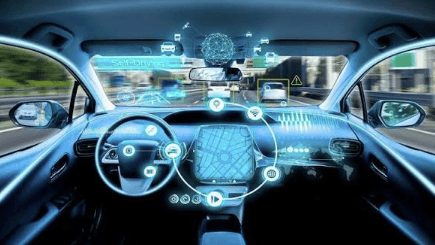

Artificial intelligence powers self-driving cars through sensor fusion, perception, and real-time decision-making. Cameras, LiDAR, and radar provide scene understanding, while learning-based models adapt to new environments. The approach promises safety improvements and operational efficiency, yet raises questions about privacy, data security, and accountability. Regulators and manufacturers pursue phased pilots and standardized metrics. The balance between verifiable safety and innovation remains unsettled, inviting attention to how governance and technology co-evolve as these systems scale.
What AI Powering Self-Driving Cars Actually Does
Self-driving cars rely on a suite of artificial intelligence components to perceive, reason, and act in real time. The system integrates sensor fusion to combine data from cameras, LiDAR, and radar, enabling robust scene understanding.
Through self learning, models adapt to new environments, refining decisions about speed, path, and safety checks, while maintaining verifiable, auditable behavior for accountable autonomy.
See also: financepoly
Benefits for Safety, Efficiency, and Daily Life
The deployment of autonomous driving systems yields measurable gains across safety, efficiency, and daily life by reducing human error, optimizing route choice, and expanding mobility options.
Empirical assessments indicate fewer collisions, smoother traffic flow, and enhanced accessibility for underserved communities.
Yet privacy concerns and data security must be addressed to maintain trust, ensuring transparent data practices without compromising performance or freedom of movement.
The Big Risks: Privacy, Accountability, and Job Shifts
As benefits in safety and efficiency accrue, the emergence of autonomous driving systems shifts attention to systemic risks that warrant scrutiny: privacy, accountability, and job transitions.
The discussion emphasizes privacy concerns and regulatory accountability, examining data provenance, surveillance scope, and traceable decisions.
Empirical evaluation highlights potential biases, leakage risks, and accountability gaps, urging transparent frameworks, rigorous metrics, and robust safeguards without stifling innovation.
What Regulators and Manufacturers Are Doing Next
Regulators and manufacturers are advancing a coordinated response to guide the deployment of autonomous driving technology through phased pilots, standardized safety assessments, and interoperable data practices. This framework emphasizes rigorous evaluation, traceable performance, and accountable governance.
Regulatory incentives align innovation with safety benchmarks, while Manufacturer compliance ensures uniform testing, reporting, and cybersecurity. The approach seeks scalable, transparent progress without compromising fundamental freedom and public trust.
Frequently Asked Questions
How Do Self-Driving Cars Learn to Drive New Routes?
Self-driving systems learn new routes through planning and exploration, updating maps and policies. They use sensor fusion to integrate data from cameras, LiDAR, and radar, calibrating safety margins and trajectory choices for robust, independent navigation across environments.
Can AI Handle Edge Cases in Unpredictable Weather?
Yes, AI can perform edge case handling with unpredictable weather analysis, though effectiveness hinges on rigorous testing, robust sensing, and conservative decision-making; safety-focused empirical evaluation ensures dependable performance while preserving user freedom through transparent, auditable risk management.
What Happens to Data Collected by Sensors During Trips?
Data from sensors during trips is stored, processed, and may be anonymized, then accessed under strict controls. Like a cautious explorer, the system prioritizes data privacy and sensor ethics, ensuring rigorous, safety-focused, empirical handling for an audience seeking freedom.
Will Self-Driving Cars Replace Human Drivers Entirely?
Self-driving cars will not entirely replace human drivers. Machines may assume dominant roles; however, residual human oversight and hybrid models persist. Will machines replace driving, ethical implications demand robust safeguards, transparency, and accountability for safe, freedom-respecting deployment.
How Are Accidents Involving Autonomous Cars Investigated?
Autonomous-car investigations unfold through standardized protocols, with investigators tracing event data, sensor logs, and control decisions. Suspense emerges as timelines converge; liability frameworks determine fault, while independent reviews validate safety conclusions within rigorous, empirically grounded investigation protocols.
Conclusion
In sum, AI-powered driving marks a measured advance, delivering safer roads and smoother traffic while quietly reshaping daily life. The technology’s promise rests on rigorous validation, transparent data practices, and careful risk screening. As regulators refine standards and manufacturers implement accountable safeguards, the road ahead emphasizes reliability over speed—reducing harm, not erasing consequence. With prudent oversight and ongoing vigilance, society may reap broad mobility gains while honoring privacy, fairness, and human stewardship behind every steering wheel.